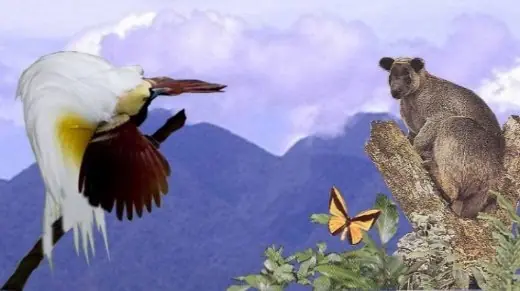
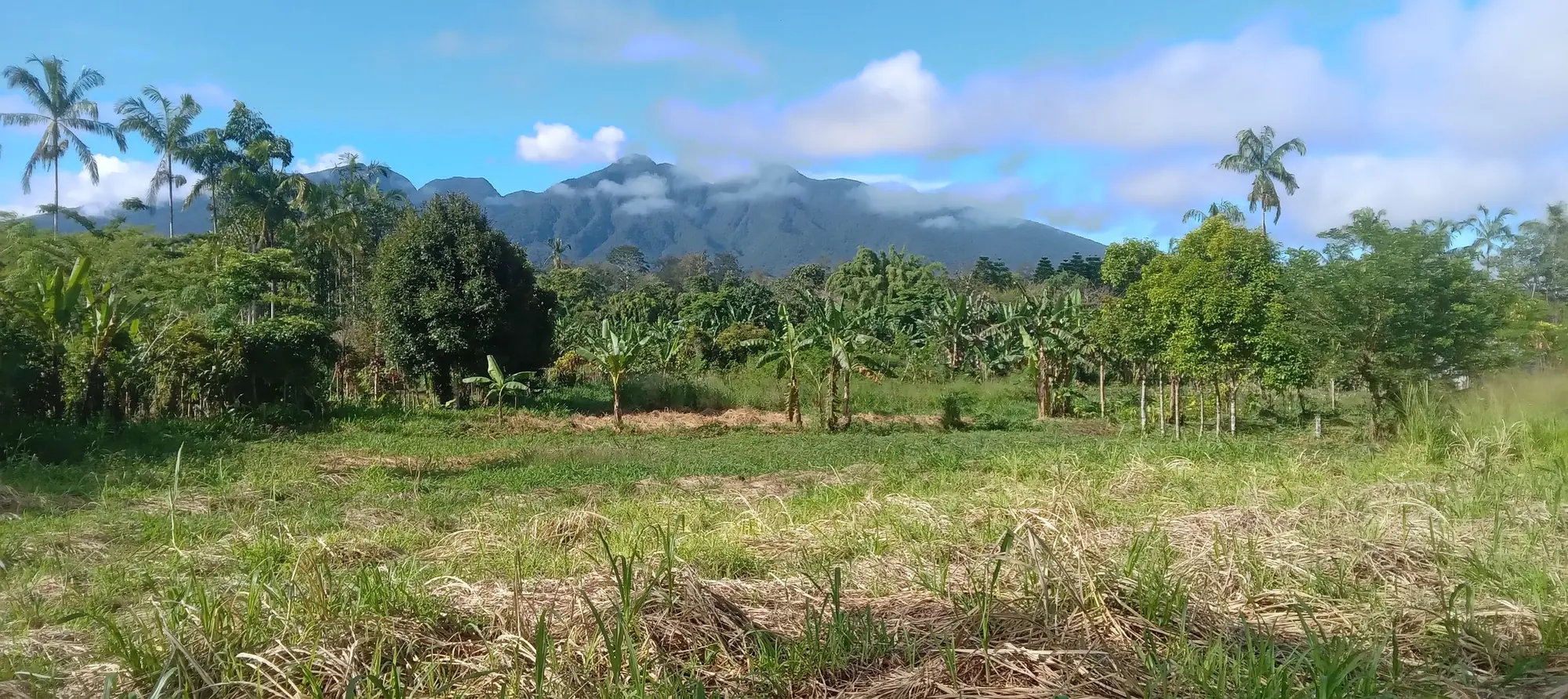
The Karimui Owlet-Nightjar has one of the most remarkable stories in ornithology — and it's found only in the forests KCRMPI seeks to protect.
Discovery: 1964
On August 16, 1964, a local man in the Karimui Basin gave ornithologist Jared Diamond a single bird specimen. It had been caught by hand while sleeping during daylight. Diamond recognised it as something new — significantly larger than any known owlet-nightjar subspecies — and named it Aegotheles bennettii terborghi after his colleague Dr. John Terborgh.
The bird was described from that single specimen and published in American Museum Novitates in 1967. No one would see one alive for over five decades.
The 52-Year Gap
Despite extensive fieldwork on Mt Karimui — including Ben Freeman and Alexandra Class Freeman's comprehensive avifauna surveys in 2011–12, which documented 271 bird species — the Karimui Owlet-Nightjar was never encountered. It became one of the world's most enigmatic birds.
Rediscovery: July 2016
On July 19, 2016, birders Markus Lagerqvist, Ashley Banwell, and Roger McNeill were on the northeast ridge of Mt Karimui at approximately 1,530–1,570m elevation when a local hunter noticed an old tree with a nest hole. He drew the team's attention to a bird emerging at dusk.
They observed the Karimui Owlet-Nightjar for approximately one hour — the first confirmed field observation in 52 years. Photographs and a sound recording were obtained.
Species Status: 2024
In the 2024 eBird taxonomy update, the Karimui Owlet-Nightjar was elevated from subspecies to full species status — Aegotheles terborghi. It is one of the world's rarest birds, known from only two confirmed observations in all of history.
Conservation Significance
The Karimui Owlet-Nightjar is found only in the montane forests of Mt Karimui. Its survival depends on the protection of exactly the habitat that KCRMPI and its partners are working to gazette as a conservation area. This bird is not just a scientific curiosity — it is a powerful symbol of why the Mt Karimui Conservation Area matters.